
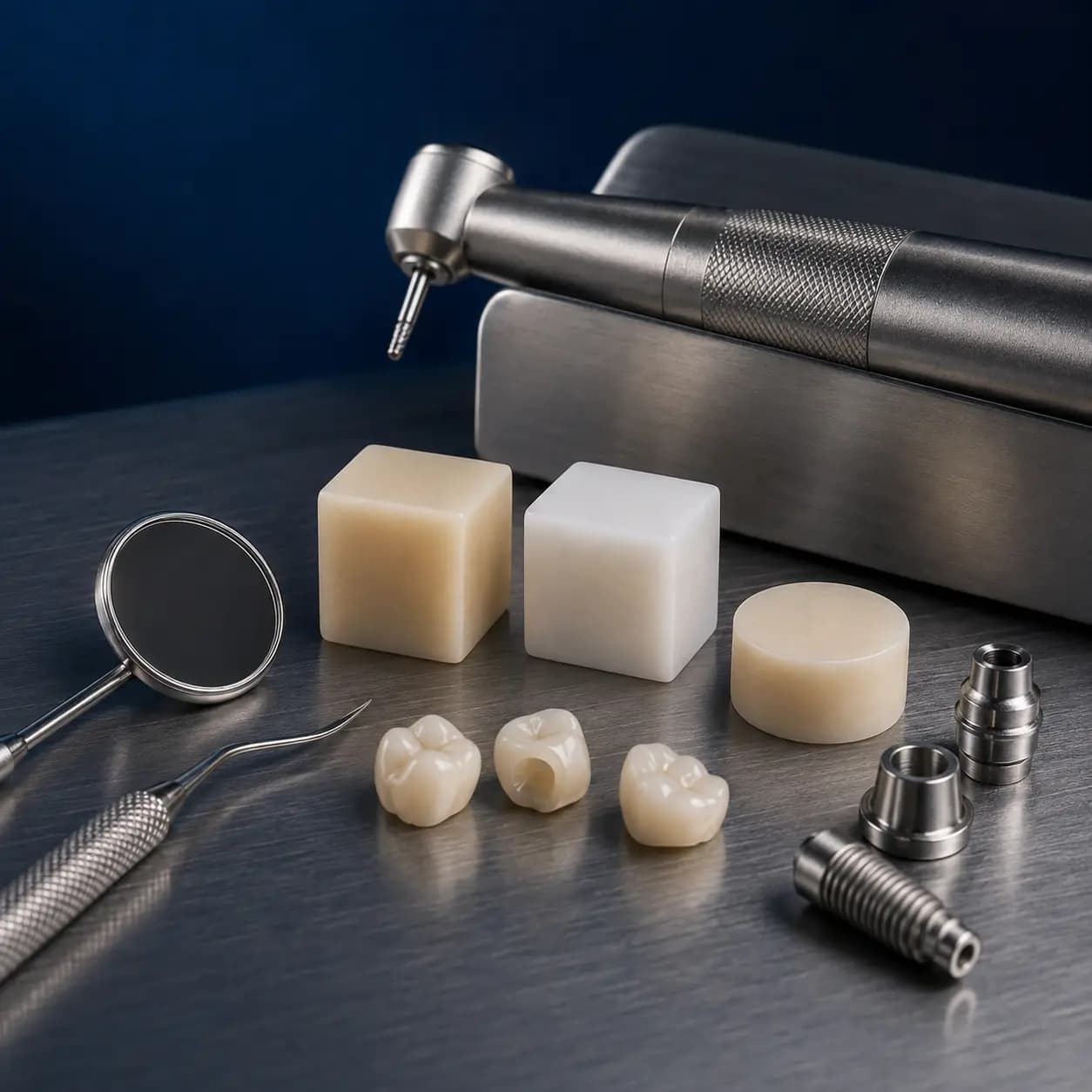
Start with your product list
If you are purchasing materials for a clinic, replenishing a distributor's range or selecting equipment, send your existing list. Names, item codes, catalogue links or photographs are all useful. Even where some identifiers are unknown, the list shows where sourcing should begin.
We will separate materials, instruments, components and equipment into individual items and compare offers against your needs. This lets the clinic or distributor see differences in the contents and specifications of products with similar names.
Specifications to agree
For consumables, format and pack size matter; for instruments and components, dimensions, design and compatibility; for equipment, configuration, accessories and documentation. You can provide only the requirements you know. Missing information becomes a question for the manufacturer rather than a barrier to an initial enquiry.
If you are considering replacing a familiar item, identify the parameters that cannot change. Alternatives can then be compared against your task rather than appearance or commercial name.
From offer to selected item
After reviewing the list, we compare available offers and decide whether an evaluation sample is needed. If it is, the assessment is linked to the exact product identifier and version. For equipment, we check the kit contents separately; for materials, the pack unit and batch information.
Documents, labelling and handling requirements are checked for each specific item. This identifies open questions before ordering and avoids applying findings about one product to the entire range.
Checks before acceptance
Once the batch contents are agreed, it is useful to define the acceptance information in advance: item identifiers, quantity, kit contents, packaging and documents. A discrepancy can then be linked to a specific product and the next action determined.
This is particularly important for repeat purchases: a new batch must match the agreed item, and changes to its design or accessories should be discussed before dispatch.
Starting the conversation
Describe who the products are for and which items are needed now. Add known item codes or specifications and indicate where alternatives are acceptable. If you do not yet have a list, start with the intended use and approximate range; together we will identify which items to source first.